
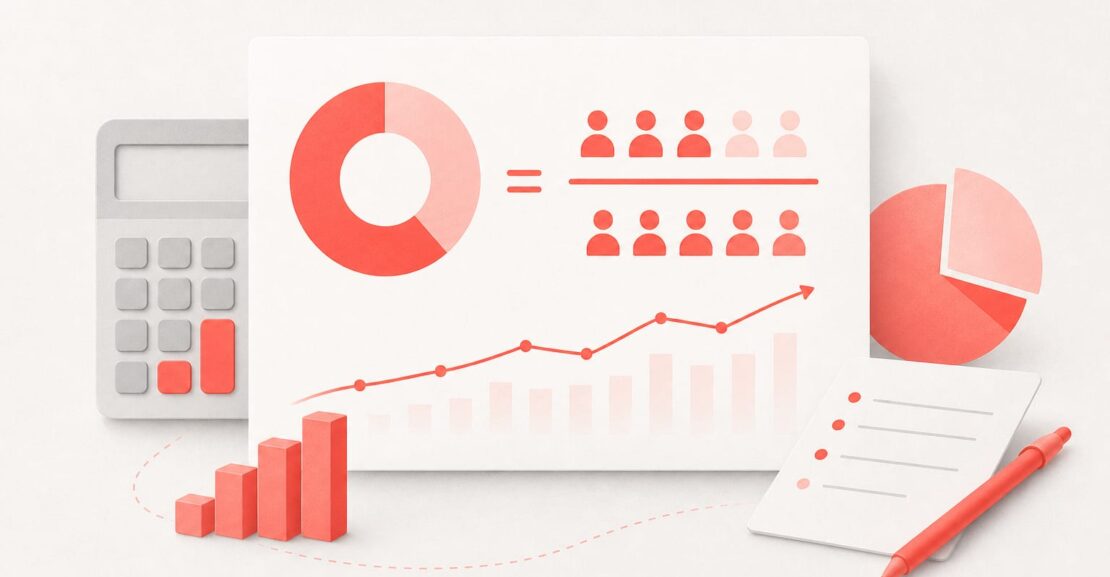
Calculating customer retention rate is essential for understanding how well your business retains its customers over time. This metric not only reflects customer satisfaction but also influences your long-term profitability. By analyzing retention rates, businesses can identify trends, improve customer experience, and ultimately increase revenue. In this comprehensive guide, we’ll break down the process of calculating customer retention rate, explore its significance, and provide actionable insights to enhance your retention strategies. Key takeaways
- Understanding customer retention rate is crucial for business growth.
- A higher retention rate indicates better customer satisfaction.
- Effective strategies can significantly improve retention rates.
Understanding Customer Retention Rate
Definition of Customer Retention Rate
The customer retention rate (CRR) is a critical metric that measures the percentage of customers who continue to engage with a business over a specific period. It reflects the loyalty of a company’s customer base and is calculated by taking the number of customers at the end of a period, subtracting new customers acquired during that period, and dividing the result by the number of customers at the beginning of the period. This formula provides valuable insights into how effectively a business retains its customers.
Importance of Retention for Business Growth
Understanding and improving customer retention is essential for sustainable business growth. Retaining existing customers is often more cost-effective than acquiring new ones, as the cost of acquiring new customers can be significantly higher. Additionally, loyal customers tend to spend more and can become advocates for your brand, leading to further customer acquisition through referrals. Businesses focusing on enhancing retention can expect to see improvements in their overall profitability and market position.
Key Metrics Related to Retention
When measuring customer retention rate, several related metrics provide a more comprehensive picture of customer loyalty and engagement:
- Churn Rate: The percentage of customers who stop doing business with a company during a specific timeframe.
- Customer Lifetime Value (CLV): The total revenue a business can expect from a single customer account throughout the business relationship.
- Net Promoter Score (NPS): A measure of customer satisfaction and loyalty based on how likely customers are to recommend the business to others.
For example, a business can calculate its customer retention rate over a year as follows:
- Start with 1,000 customers at the beginning of the year.
- Acquire 200 new customers during the year.
- End the year with 1,100 customers.
- Apply the formula: (1,100 – 200) / 1,000 = 0.9 or 90% retention rate.
This example illustrates the significance of understanding customer retention rates, as a high rate can indicate strong customer loyalty and satisfaction, while a low rate may highlight areas needing improvement. By regularly calculating customer retention rate and analyzing related metrics, businesses can develop strategies to enhance customer loyalty and ultimately drive growth.
How to Calculate Customer Retention Rate

Calculating customer retention rate is essential for understanding the loyalty of your customer base. This metric reveals how effectively your business retains customers over a specific period. Below, we outline the formula for customer retention rate and provide a step-by-step guide to accurately measure it.
Retention Rate Formula Explanation
The basic formula customer retention rate is expressed as: Retention Rate (%) = ((E – N) / S) × 100 In this formula:
- E = Number of customers at the end of the period
- N = Number of new customers acquired during the period
- S = Number of customers at the start of the period
Step-by-Step Calculation Process
- Determine the Time Period: Decide on the duration for which you want to measure retention, such as monthly, quarterly, or annually.
- Count Starting Customers (S): Record the total number of customers at the beginning of the period.
- Count Ending Customers (E): At the end of the period, tally how many customers you have retained.
- Count New Customers (N): Identify how many new customers were acquired during this period.
- Plug Values into the Formula: Substitute your values for E, N, and S into the retention rate formula to calculate the percentage.
Concrete Example
Suppose you start with 200 customers (S), acquire 50 new customers (N), and end with 180 customers (E). Using the formula: Retention Rate = ((180 – 50) / 200) × 100 = 65% This means you retained 65% of your customers over the specified period.
Common Variations of the Formula
While the basic formula provides a straightforward approach, there are variations to consider based on your business model:
- Gross Retention Rate: Excludes new customers from the calculation, focusing solely on existing customer retention.
- Net Retention Rate: Includes upsells and expansions, offering a more comprehensive view of revenue retention from existing customers.
Understanding these variations can enhance your insights when measuring customer retention rate, allowing for more tailored strategies.
Comparing Retention Rate with Other Metrics
Retention Rate vs. Churn Rate
The concepts of retention rate and churn rate are intrinsically linked, yet they provide different perspectives on customer behavior. Retention rate measures the percentage of customers who remain with a business over a specific period, while churn rate quantifies the customers lost during the same timeframe. The formulas for these metrics are inversely related: if you know the churn rate, you can easily compute the retention rate and vice versa.
For example, if your churn rate is 20%, your retention rate is 80%. Understanding the balance between these two metrics is vital for calculating customer retention rate effectively and assessing overall customer satisfaction.
Lifetime Value (LTV) and Its Relation to Retention
Lifetime Value (LTV) is another essential metric that directly correlates with customer retention. LTV estimates the total revenue a business can expect from a single customer throughout their relationship. A high retention rate typically leads to a higher LTV, as customers who stay longer are likely to generate more revenue over time. Therefore, businesses should focus on strategies that enhance retention to improve LTV.
Customer Acquisition Cost (CAC) Comparison
When evaluating retention, it’s crucial to consider Customer Acquisition Cost (CAC). CAC represents the total cost of acquiring a new customer, including marketing and sales expenses. A low retention rate may indicate that a business is spending significantly on acquiring customers who do not stay long enough to justify the investment. Balancing CAC with retention efforts can lead to a healthier overall business model.
| Metric | Description | Formula |
|---|---|---|
| Retention Rate | Percentage of customers retained over a period | (Customers at end of period / Customers at start of period) x 100 |
| Churn Rate | Percentage of customers lost over a period | (Customers lost / Customers at start of period) x 100 |
| Lifetime Value (LTV) | Total revenue expected from a customer relationship | Average Purchase Value x Purchase Frequency x Customer Lifespan |
| Customer Acquisition Cost (CAC) | Total cost to acquire a new customer | Total Marketing Expenses / Number of New Customers Acquired |
in short, while measuring customer retention rate is vital for understanding customer loyalty, it is equally important to assess it alongside related metrics such as churn rate, LTV, and CAC. This holistic approach allows businesses to make informed decisions that enhance both customer satisfaction and profitability.
Real-World Examples of Customer Retention Rate

Case Study: A Successful Retention Strategy
One notable example of effective retention strategies comes from a leading subscription-based service in the streaming industry. This company implemented a multi-faceted approach to enhance their customer loyalty. By analyzing their customer data, they found that a significant percentage of cancellations occurred after the free trial period. To address this, they introduced a targeted email campaign offering personalized content recommendations based on user viewing history. This initiative not only boosted engagement but also led to a noticeable increase in their customer retention rate. Over a six-month period, their retention rate improved by approximately 15%, illustrating the importance of understanding and addressing customer needs.
Industry Benchmarks for Retention Rates
Understanding where your business stands in comparison to the industry can provide essential insights. Generally, average customer retention rates vary significantly by sector. For instance, SaaS companies often target a retention rate of around 90%, while retail businesses may aim for a range of 60-80%. According to industry surveys, companies with effective retention strategies consistently outperform their competitors. High-performing companies often boast retention rates above 75%, underscoring the critical role of measuring customer retention rate to inform business strategies.
Lessons Learned from High-Performing Companies
Several lessons emerge from companies known for their exceptional retention rates:
- Personalization: Tailoring communications and offers based on customer behavior enhances engagement and loyalty.
- Feedback Loop: Regularly soliciting and acting on customer feedback fosters trust and satisfaction.
- Proactive Support: Offering proactive customer support through various channels reduces churn and improves overall experience.
- Value Addition: Continuously innovating and adding value to products or services keeps customers invested in the brand.
By implementing these strategies, companies can effectively enhance their customer retention rate and reduce customer retention cost, driving long-term growth and sustainability.
Common Mistakes and Tools for Tracking Retention
Common Mistakes in Retention Calculation
When it comes to calculating customer retention rate, businesses often fall into common traps that can skew their understanding of customer loyalty. One prevalent mistake is failing to define a clear time frame for measurement. Without a consistent period, such as monthly or annually, comparisons can become meaningless. Additionally, many organizations neglect to account for customer churn accurately, which can result in inflated retention figures. It is vital to differentiate between active and inactive customers to avoid misrepresentation.
Another frequent error is using a broad definition of “customer.” For instance, including one-time buyers in the retention formula can distort results. Instead, focus on repeat customers who contribute to sustained revenue. Also, many overlook the impact of seasonality on retention rates; this can lead to misleading interpretations if not factored into analysis. In short, clearly defining metrics and understanding customer behavior are essential to avoid faulty conclusions.
Tools and Software for Tracking Retention Rates
A variety of tools can assist businesses in measuring customer retention rate effectively. Here are some recommended options:
- Customer Relationship Management (CRM) Software: Platforms like Salesforce or HubSpot offer robust analytics features that help track customer interactions and retention metrics.
- Business Intelligence Tools: Software such as Microsoft Power BI and Tableau can visualize retention data effectively, making it easier to spot trends. For example, how to calculate customer retention rate in Power BI involves importing customer data, setting parameters, and using DAX formulas to derive insights.
- Email Marketing Platforms: Services like Mailchimp can track engagement rates, providing insights into customer loyalty and retention over time.
Best Practices for Monitoring and Improving Retention
To enhance retention rates, it is crucial to adopt best practices that focus on consistent monitoring and improvement. First, establish a clear formula customer retention rate that aligns with your business goals. Regularly analyze customer feedback and behavioral data to identify areas for improvement. Implement customer satisfaction surveys and focus groups to gain direct insights into customer needs.
Next, utilize cohort analysis to understand the behavior of different customer segments over time. This approach helps in tailoring marketing strategies to specific groups, ultimately boosting retention. Lastly, invest in customer support training to ensure your team is equipped to handle inquiries effectively, fostering a positive customer experience.
By avoiding common pitfalls and utilizing the right tools, businesses can gain a clearer picture of their customer retention rates, leading to informed strategies for enhancing loyalty and revenue.
Frequently Asked Questions
How do you measure customer retention rate?
You measure customer retention rate by dividing the number of customers at the end of a period by the number of customers at the beginning of that period, then multiplying by 100.
What is a good customer retention rate?
A good customer retention rate typically varies by industry, but generally, a rate above 75% is considered favorable.
How do you calculate a retention rate?
To calculate retention rate, use the formula: (Customers at end of period – New customers during period) / Customers at start of period x 100.
What does 80% retention rate mean?
An 80% retention rate means that 80% of your existing customers continue to do business with you over a defined period, indicating strong customer loyalty.
Final thoughts
Enhancing your customer retention rate can lead to significant growth and stability for your business. By implementing the strategies discussed, you can foster customer loyalty and ensure long-term success. Start tracking your retention metrics today to identify areas for improvement and take your business to the next level.
Further reading: calculating customer retention rate — wallstreetprep.com
Powered by AutoSEO — AI SEO content on autopilot.